



































































The predator approaches. Big hands race towards you, grasping your skin like talons. You run towards safety, to the hiding places that protect you, but even there, you aren’t safe. Your home is lifted above you. You race around frantically, desperate to find cover. But those big, scary hands are racing towards you again. You can’t escape. They grab you and try to break free. But it is no use. They’ve got you. You will die.
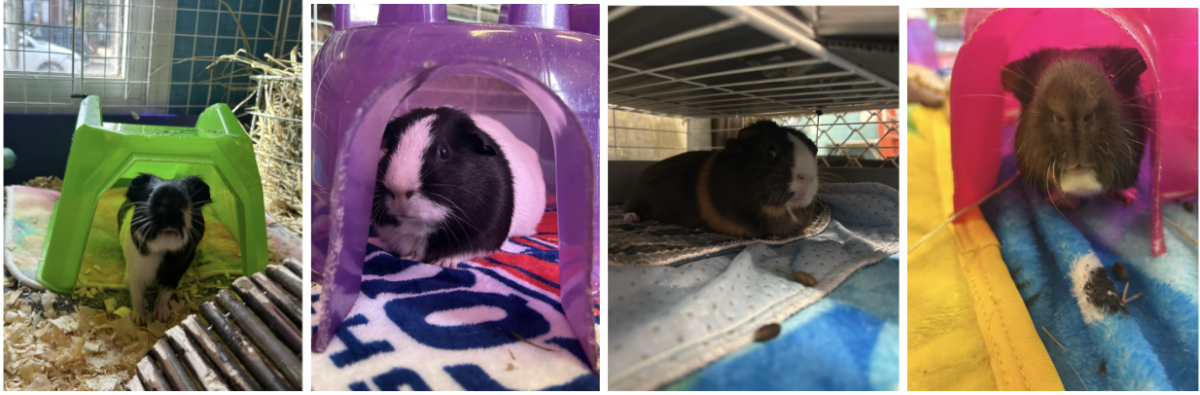
This is the experience of the common, domestic guinea pig. The animal lab at ACC has many critters that call it home, but the best (in my not-so-humble opinion) are the guinea pigs. The animal lab is currently home to four girls: Oreo, Una, S’mores, and Ruby. They are listed in the order of most to least friendly. Some people may be frustrated by a guinea pig’s skittish tendencies, but please don’t blame them. They’re prey by nature, and being aggressively grabbed at from above would terrify pretty much anyone, regardless of status in the food chain. They are constantly being grabbed at by who knows how many students every day, some of whom are not good with handling guinea pigs. Over time, the guinea pigs learn to fear humans, and now whenever you go up to their cage, they run to hide.
This article was sparked by a recent encounter in the lab with two older students. I was visiting the guinea pigs, contemplating picking them up, but wary not to scare them. Then, two students from a class walk in because they need to brush them for an assignment. I watch as they begin leaning over the cage and grabbing at the guinea pigs. Obviously frightened, the guinea pigs zoom around the cage, trying to evade capture. I watched as the two students struggled to pick the guinea pigs up, but I didn’t feel bad because they couldn’t complete their assignment; I felt bad for the guinea pigs. I offered to help pick them up, but it wasn’t to help them; it was for the guinea pigs. After talking to the students more, they said something I found very peculiar: “Picking up the guinea pigs scares me.” I was, quite frankly, perplexed, and then sorrowful. How can you be scared when you aren’t the prey animal being aggressively snatched at? I realized that this mindset is the reason why these students couldn’t pick up the guinea pigs.
Animals read our energy. If you go up to a cage with anxious energy, of course, the animal inside will be anxious as well! In addition, if you view picking up the guinea pigs as a dreadful chore, of course, they are going to be terrified as you haphazardly grab at them! It shouldn’t be a surprise that the guinea pigs are terrified of you while you try to pick them up.
So, how do I propose handling guinea pigs? BE GENTLE. Don’t immediately reach into the cage and grab at them. I always go up to the cage first and just watch them for a few moments. I usually talk to them as well. I cultivate a calm and loving energy, which animals can read. I try to first pet them. I reach my hand out towards them and wait for them to sniff, similar to a dog. If they back away, I try not to chase them, because this will only scare them more. Now, I will admit, Ruby won’t let me pet her at all, but I am trying to show her that not all human touch is aggressive and scary. S’mores will let me pet her, but picking up is nearly impossible. I can easily pet and pick up Una, but she doesn’t like to be held (she will jump out of your arms). Once I am petting their head, even skittish piggies will start to close their eyes and let you pet them harder. This is a great segue to pick them up. With my hands still on their head, I will gently move towards their body and pick them up. The guinea pig will be very alarmed, as getting picked up will always be a stressful experience, since it’s way less stressful than being chased. Despite these things, I have tried to pick up S’mores and Ruby but have never been successful. Am I frustrated at them? No! I always have empathy for the animals, and it is totally understandable why they hate being picked up. It is not that the guinea pigs “don’t like me,” they are simply trying to survive.
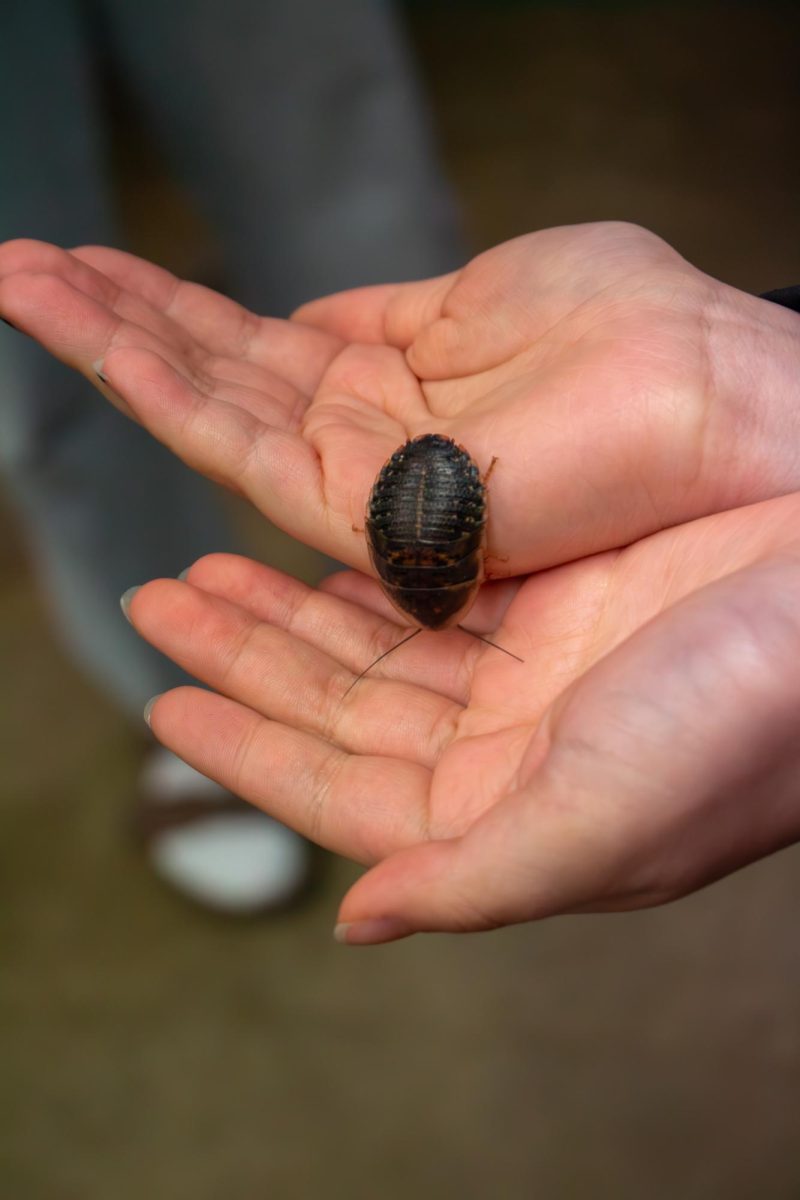
Being an “animal person” isn’t just about thinking kittens are cute and loving your dog. It’s about a deep, unconditional empathy for all living creatures, even something as small as a bug. It’s about truly feeling a connection and mutual understanding for the animals you care for. It’s recognizing that animals are actually really smart, and believing in their capabilities. I believe that this is the key to being an “animal whisperer.” It’s not some magical skill people are born with;, if you open your heart to empathy, you too can possess this skill. And most importantly, guinea pigs won’t be (as) scared of you.