

















































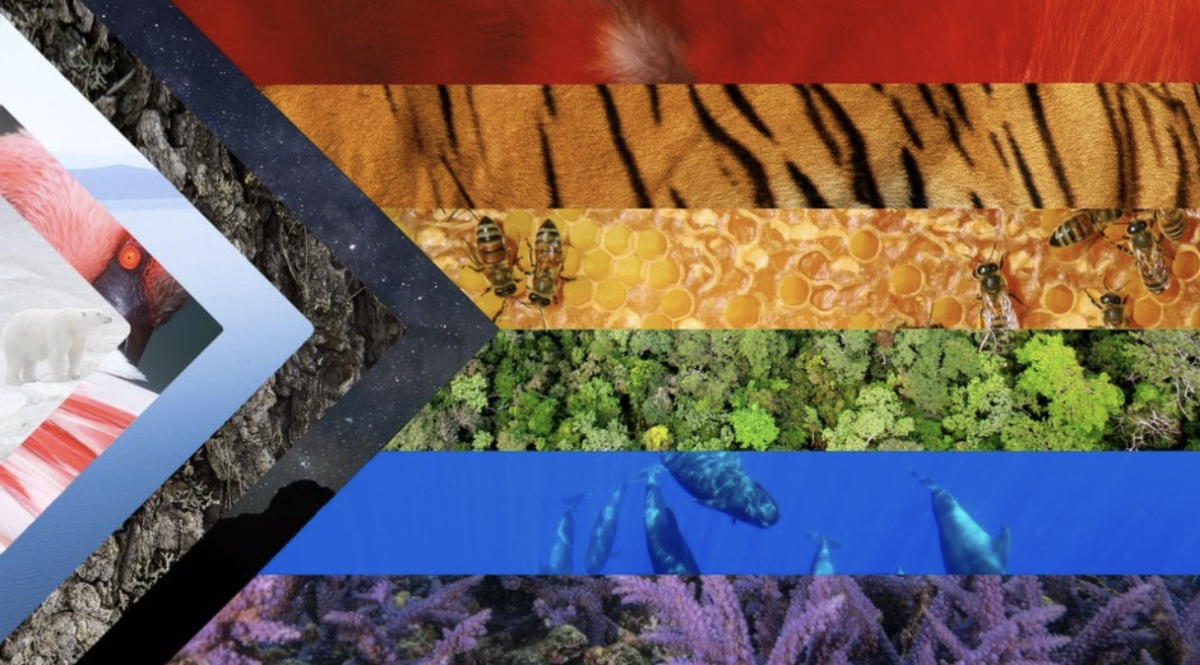














“Homosexuality isn’t natural.” Unfortunately, this homophobic argument is all too common. However, that is in fact not the case in nature. It is commonly cited that homosexual/queer behavior has been observed in over 1,500 species. However, according to the Natural History Museum, that figure is a gross underestimate, due to under-researching and under-reporting. Most animal species probably have some levels of queer behavior. Same-sex behavior or SSB is found in all major animal groups: birds, reptiles, fish, arthropods, mollusks, and mammals. It is especially common in primates, found in 51 species! This behavior is also equally common in males and females, with most species engaging in both.
There is a long list of animals that display SSB (that have been researched and documented). Many species like fruit flies, flatworms, and deep-sea squid mate with everyone, which is now known as pansexuality. A very well-known example is bisexual bonobos. Most bonobos mate with both genders. Bonobos don’t just have sex for reproduction; they use it to move up the social ladder. Another heartwarming example comes from Central Park Zoo. Roy and Silo were two male penguins who were displaying mating behaviors together. They were given a rejected egg and raised a daughter together, Tango. She turned out to be gay as well! In fact, as early as 1910, a pair of male penguins was famous for laying eggs and raising the chicks together.
In 1972, gulls were found to be nesting double the number of eggs as usual. It was concluded that two females had mated and then coupled together to raise their eggs. Out of a study group of 1,200, 14% of gulls were same-sex, and 15% of females mated with males before returning to their female partner. Unfortunately, the study caused political outrage over “wasting tax money.” Similarly, 31% of Laysan albatross couples are female and female. They will mate with a male but raise their chicks together. However, some scientists speculate that this may be because of a male shortage in the area. Male bottlenose dolphins live in male groups when they are young, and they form these bonds for life, even if they start heterosexual mating. 8% of domestic sheep/rams are homosexual for life.
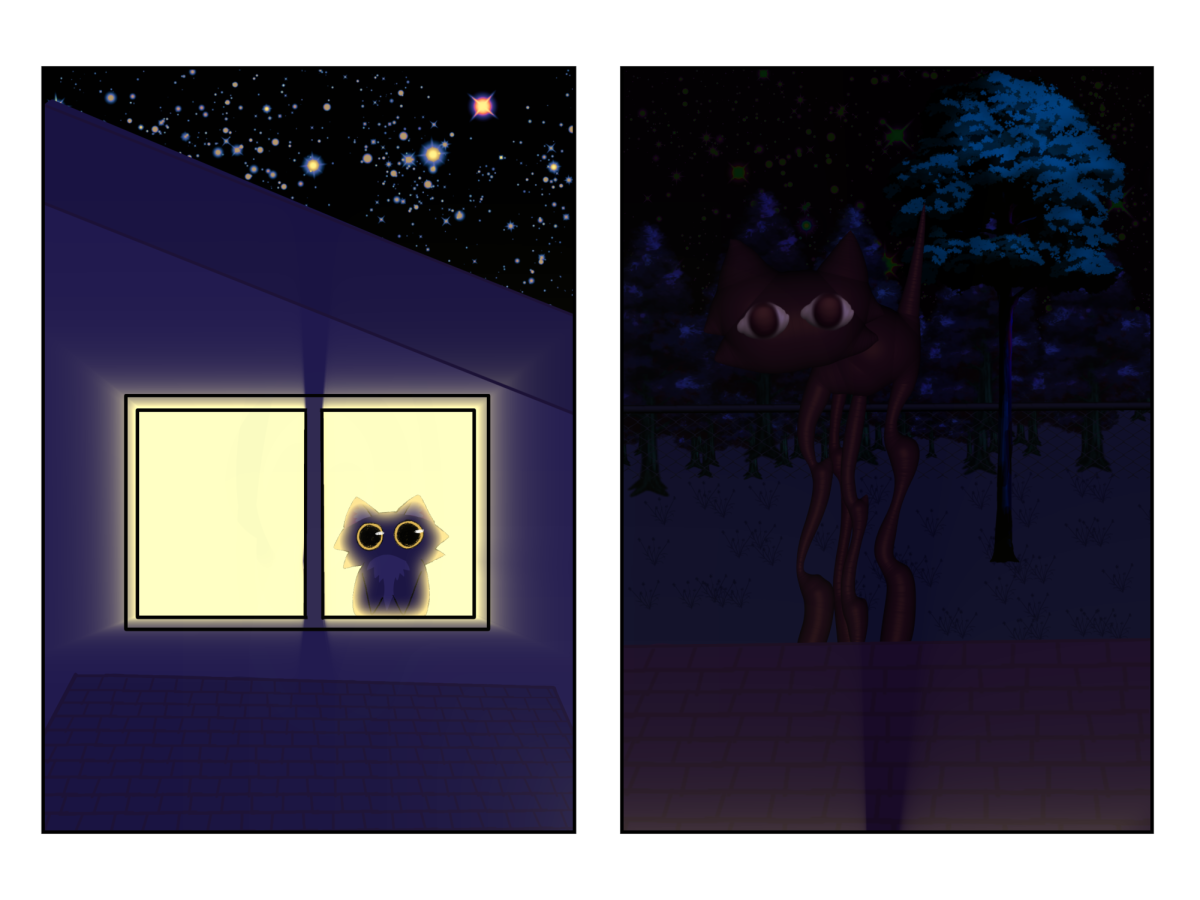
As for gender diversity in nature, clownfish groups are led by a female. If she dies, the oldest male will become female to resume her role. And in cleaner wrasse fish, the opposite happens. Lionesses in Botswana have been known to grow manes and begin acting like males, such as increased scent-marking, roaring, mounting other females, and cub-killing. This is likely caused by an increase in testosterone. In fact, these maned females are usually infertile. However, it is considered a genetic and local phenomenon. The excess testosterone theory is particularly fascinating because a proposed cause of gender dysphoria in humans is being exposed to excess hormones of the opposite sex assigned at birth in the womb.
In 1834, August Kelch discovered 2 male cockchafers (beetles) mating. He didn’t believe it at first, but upon dissection, they were both male. Scientists at the time tried to explain this as a way of one beetle dominating the other one. However, it was often the bigger beetle being penetrated, yet it did nothing to overcome the other “dominant” beetle. After this, Henri Gadeau de Kerville, a French epidemiologist, made a very controversial claim that this SSB was not out of necessity, but preference. Even when in an environment with females, some still chose to mate with males. Similarly, in female macaques, it was long assumed that their homosexual behavior was because of a shortage of males. But it was found that when females were placed in an environment with other males, some still chose to mate with females.
Despite all of these examples, SSB has been historically under-researched due to taboo. The “Darwinian Paradox” claims it is impossible for genes that negatively impact an animal’s survival to exist. On the surface, homosexuality seems like a harmful behavior because it does not result in reproduction. However, this isn’t necessarily the truth. For example, in the gull example where female gulls still mated with males but partnered with females and built a nest to raise their chicks together, this has absolutely no effect on the total reproduction rate. And it was found that bisexual behavior in macaques had no long-term negative effect on lifelong reproductive success. SSB is not “costly.” In fact, SSB has benefits! Non-reproductive mating can increase bonds and influence survival. Because it benefits social relationships, studies have found that SSB is more common in social species.
Fascinatingly, while SSB exists across many different types of species, it appears more recently in mammals. This implies that homosexuality predates heterosexuality. This is because the newest species of animals have lower rates of SSB. This is likely a result of convergent evolution.
An evolutionary theory for this behavior is that before sexual reproduction, there was asexual reproduction, which is essentially cloning. When animals began to evolve towards sexual reproduction, they had no way of knowing the sex of their mate, especially since asexual reproduction involves animals that have no sex (I mean gender in this instance, but yes, the other kind of sex too). Logically, animals would have to just mate with everyone. This theory explains why SSB is older than DSB. Additionally, there is a region of the hippocampus that scientists have found influences sexual preferences.
However, while it is certainly fascinating to dive into theories on why SSB in animals exists, it is important to change the homophobic approach of “Why is homosexuality found in nature?” to “Why not?” What if there is no biological or evolutionary “reason?” What if it doesn’t need to be explained? What if animals just want to be gay? Homosexual mating is actually neutral and sometimes beneficial; there is no reason for natural selection to eliminate it. As Julia Monk of Yale School of Forestry & Environmental Studies puts it, “Imagine what we would have learned if we had assumed this was something interesting and not just a rampant accident.”
So in honor of Pride Month, let’s celebrate the diversity of sexual behaviors that exist in nature, predating modern society by millennia. The stigma placed on gender and sexual identities was human-made. So the next time you hear someone remark that “homosexuality isn’t natural,” let’s be clear that homophobia is what isn’t “natural.”
Sources:
https://equalitytexas.org/blog/queerness-in-nature-is-all-around-us/
https://www.worldwildlife.org/resources/explainers/are-there-queer-animals/
https://www.nhm.ac.uk/discover/gay-natural-history.html
https://www.nature.com/articles/s41467-023-41290-x
https://blog.nwf.org/2022/06/new-science-on-same-sex-behavior-in-wildlife/